

Determining audit costs according to Decree 99 is a crucial step for investors and businesses to proactively plan their budgets. In the context of increasingly stringent regulations on public investment management, understanding the fee framework helps ensure compliance and avoid future risks related to disallowed audits.
Decree 99/2021/ND-CP The government has established a professional system of standards for the final settlement of completed projects. In practice, however, many units are still confused about applying adjustment coefficients or are unclear about the minimum fees, leading to unnecessary discrepancies in audit contracts.
Summary of key points regarding audit costs under Decree 99
According to Decree 99, the audit fee is the maximum amount charged to an independent auditing firm to audit the final settlement report of completed projects using public investment capital. This fee is calculated as a percentage (1 TP3T) of the project's final settlement value, ranging from 0.021 TP3T to 1.61 TP3T depending on the scale and type of project. The main subjects of application are agencies, organizations, and individuals involved in the management and use of public investment capital in Vietnam.
Understanding audit costs correctly according to Decree 99 from a legal perspective.
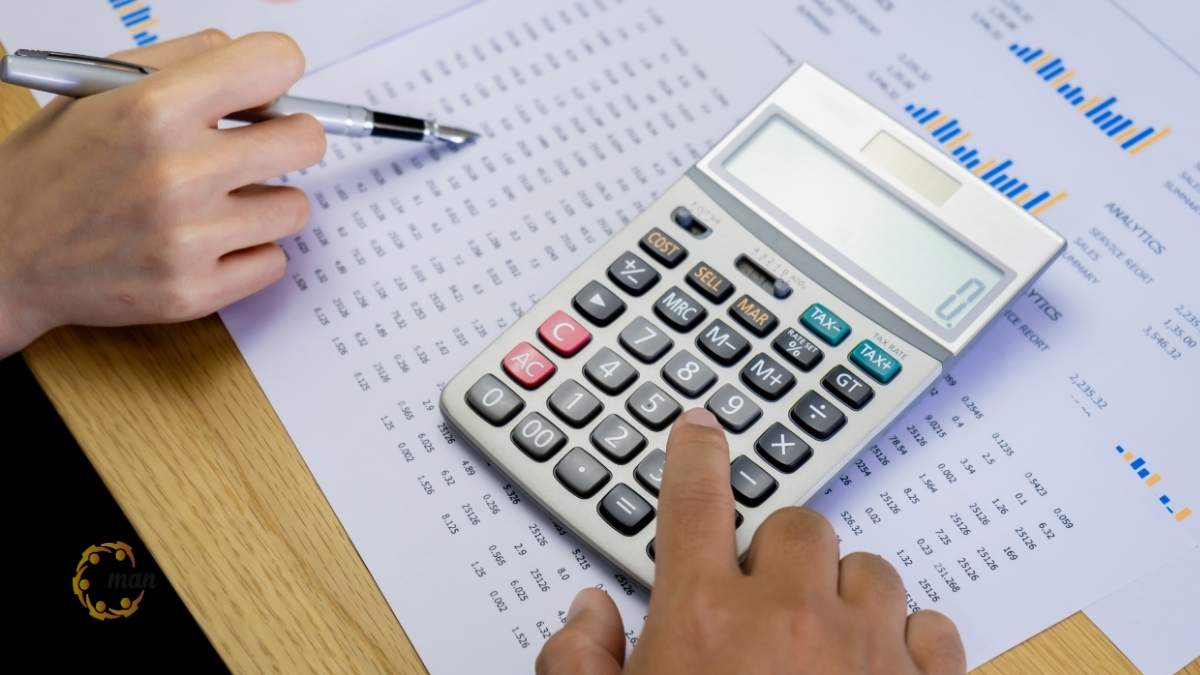
According to Article 46 of Decree 99/2021/ND-CP, independent audit fees are a component of the settlement organization costs. This is the maximum amount that the investor is allowed to pay for audit services. If the actual contract value is lower than this limit, the enterprise will save budget. Conversely, if the cost is higher, the excess amount will not be accepted by the state for payment from the project's capital.
The role of this standard is to create a common ground for the market. auditing servicesIt prevents price undercutting that affects quality control, while protecting investors from excessively high quotations. In financial management, adhering to Decree 99 helps CFOs easily explain the reasonableness of expenses to state inspection and audit teams.
Mandatory scope of application and conditions for conducting audits
This decree does not apply to all types of businesses but focuses on projects using state budget funds. This includes state development investment credit funds and other public investment funds as stipulated in current regulations.
Specifically, national key projects and Group A projects using public investment capital must undergo a final settlement audit upon completion. For Group B and Group C projects, the audit is conducted at the request of the authority that made the investment decision. If your project falls under this category, determining the audit costs according to Decree 99 is a mandatory step to complete the final settlement procedure.
Timelines and values used to calculate fees.
Many chief accountants often wonder about the actual starting point for calculating these costs. Typically, audit costs This value is determined based on the project settlement value prepared by the investor. This is the value after deducting expenses that are not included in the value of the asset formed through the investment.
However, during the planning phase, the investor will estimate the budget for auditing services based on the approved total investment. Upon project completion, the actual value will be adjusted according to the final settlement documents. The time between project handover and submission of final settlement documents is typically 6 months for Group A projects, so early hiring of auditors is necessary.
The system of related legal documents is closely interconnected.
To gain a thorough understanding of how this cost works, you need to consult important supporting documents. A solid grasp of the legal system will give you more confidence during meetings with the consulting firm.
- Public Investment Law 2019: The original document defines the types of public investment projects and funding sources.
- Independent Auditing Law 2011Regulations regarding the standards for auditing entities.
- Circular 11/2020/TT-BTCSome guidelines regarding settlement forms still retain the spirit of the circulars on investment capital management.
- Circular 09/2016/TT-BTCThe old document is often cited to compare changes in audit fee rates over time.
Detailed analysis of how audit fees are calculated according to Decree 99.

The fee calculation method under Decree 99 adheres to the principle of progressive fee collection or interpolation based on project scale. This ensures fairness between large and small-scale projects.
Standard rates for audit fees (for reference)
Below is a reference table of audit fee rates based on project size, built on the principle of inverse proportion: the larger the project, the lower the fee rate. This table helps businesses quickly estimate their audit budget and understand how audit firms determine their fees. Note that the minimum fee for an independent audit is VND 1,000,000 (excluding VAT) to ensure service quality and professional resources.
| Project scale (Billion VND) | Audit cost ratio (%) | Note |
| Under 5 billion | 0,57% | Maximum fixed level |
| 10 billion | 0,42% | Scale-based interpolation |
| 100 billion | 0,16% | Inversely proportional to the project value |
| Over 10 trillion | 0,02% | For mega-projects |
Please note that the minimum fee for an independent audit must not be less than VND 1,000,000 (excluding VAT). This regulation aims to protect the interests of audit firms for small-value projects. It ensures that the auditing entity has sufficient funds to operate a qualified professional team.
Special cases regarding equipment costs
During my professional practice, I've noticed many businesses overlook regulations regarding projects with a high proportion of equipment. According to Decree 99, if equipment costs account for 50% or more of the total settlement value, the audit fee is only calculated at the standard rate of 70%.
The reason for this adjustment is that equipment control is often based on procurement records and import invoices. The volume of on-site inspection work is usually less complex than traditional construction items. The investor needs to take this into account to avoid approving estimates that are too high compared to regulations.
Case Study: Calculating audit fees for a 120 billion VND headquarters construction project.
Suppose a company has just completed a headquarters project with a proposed total settlement value of 120 billion VND. Of this, construction costs are 50 billion VND, office equipment costs are 65 billion VND, and the remainder is for other expenses.
Step 1: Determine the equipment ratio.
Equipment ratio = 65 / 120 = 54,161 TP3T. Since this ratio is greater than 501 TP3T, the project falls under the category eligible for a reduced audit fee according to specific regulations.
Step 2: Calculate according to the standard rate.
Refer to the standard rate table for a value of 120 billion VND (assuming after interpolation the rate is 0.14%). Unreduced audit fee = 120 billion x 0.14% = 168 million VND.
Step 3: Apply the adjustment factor.
Actual audit fee = 168 million x 70% = 117.6 million VND (excluding VAT). Without a thorough understanding of the regulations regarding the 70% coefficient, the investor may approve a significantly incorrect fee.
Expert opinion: Risks and real-world experiences
Having observed the Vietnamese market for over 30 years, I've found that the most common mistake isn't miscalculating the decimal points. The real problem lies in businesses choosing contractors who lack the necessary capabilities.
Many companies quote prices close to the minimum threshold of 1 million VND to secure contracts, but subsequent audit reports often fail to meet quality standards. This leads to authorities requiring rework or completely rejecting the final settlement results.
Another risk is confusing public investment projects with projects using state-owned enterprise capital. The audit cost determination process under Decree 99 only applies to public investment capital. Applying it mechanically to commercial projects could create unnecessary administrative difficulties.
My experience is that you should request the auditing firm to prepare a detailed cost estimate based on Decree 99 before signing the contract. The estimate should clearly state the base value, the applicable rate, and the adjustment coefficients. This is solid evidence to protect you before inspection teams or agencies approving the final accounts later.
Conclude
Understanding audit costs according to Decree 99 helps businesses optimize their budgets and create a solid legal foundation. An accurate cost estimate will facilitate the approval process for final accounts, freeing up resources for subsequent business activities.
If you are still unsure about how to apply the standards to your specific case, MAN – Master Accountant Network is always ready to assist. We provide professional auditing services, helping to resolve any bottlenecks in financial settlement and management. With a team of experienced professionals, MAN is committed to providing complete peace of mind to all clients.
Service contact information at MAN – Master Accountant Network
- Address: No. 19A, Street 43, Tan Thuan Ward, Ho Chi Minh City
- Mobile/Zalo: 0903 963 163 – 0903 428 622
- Email: man@man.net.vn
Content production by: Mr. Le Hoang Tuyen – Founder & CEO MAN – Master Accountant Network, Vietnamese CPA Auditor with over 30 years of experience in Accounting, Auditing and Financial Consulting.
Frequently Asked Questions about Audit Fees under Decree 99
Do audit fees under Decree 99 include VAT?
The rate specified in Decree 99 refers to the pre-tax cost. You need to add VAT as stipulated at the time of signing to determine the total contract value.
If my project is only worth 1 billion VND, how will the audit fee be calculated?
According to the rate of 0.57%, the fee would be 5.7 million VND. Since this figure is higher than the minimum of 1 million VND, you will apply the 5.7 million VND rate to your project.
Can I negotiate a price lower than the rate stipulated in Decree 99?
Absolutely. Decree 99 only stipulates a maximum ceiling. The investor has the right to negotiate a more competitive price with auditing firms, as long as the quality of work is guaranteed.
How are additional audit costs determined when a project incurs additional expenses?
Additional costs are calculated based on the extra amount incurred in the final settlement. You should apply the same percentage and adjustment factor principles as in the original audit.
Does Decree 99 apply to the auditing of annual financial statements?
No. This decree applies only to the final settlement of completed public investment projects. For annual financial reports, fees are agreed upon based on the size of assets and the complexity of the business.