

Financial reporting services are a key solution for businesses, especially small and medium-sized enterprises (SMEs), to address the challenges of data transparency and tax compliance. According to statistics from the General Department of Taxation in 2023, over 351 businesses were penalized for accounting violations due to errors in the preparation and presentation of financial reports. Understanding these regulations is crucial. Circular 200/2014/TT-BTC or Circular 133/2016/TT-BTC It's not just a responsibility, but also a protective barrier for businesses against serious legal risks.
The complexity of the Vietnamese Accounting Standards (VAS) system demands that practitioners possess a systematic mindset and extensive practical experience. A well-structured financial reporting system not only serves the tax authorities but also acts as a "passport" for businesses to access bank capital or attract investment. In the context of increasingly stringent post-tax audits, finding a professional service provider is a strategic decision. Let's explore the detailed professional aspects in the content below.
The current legal framework governing financial reporting activities.
The provision of financial reporting services must be based on currently effective legal regulations. Below is a summary of the most important documents that accountants need to comply with.
| Legal documents | Applicable subjects | Main content |
| Accounting Law No. 88/2015/QH13 | All accounting units | General regulations on financial documents, books, and reports. |
| Circular 200/2014/TT-BTC | Businesses of all economic sectors | Guidelines for business accounting system |
| Circular 133/2016/TT-BTC | Small and medium-sized enterprises | Simplified accounting system for SMEs |
| Decree 41/2018/ND-CP | Administrative violations | Regulations on penalties in the field of accounting and auditing. |
Misapplication of circulars or failure to keep up-to-date with guidance documents from the General Department of Taxation may lead to the rejection of financial statements or the exclusion of expenses during corporate income tax settlement.
Why do businesses need to use financial reporting services?

Financial reporting services are not simply about entering invoices and documents into accounting software. It's a process of compiling economic and financial information from various economic activities to provide a comprehensive overview of an entity's assets, capital, and business results during an accounting period.
Strictly comply with the Accounting Law 2015 and its guiding decrees.
According to Article 29 of the 2015 Accounting Law, financial statements must be prepared based on data after the accounting books have been closed. Many businesses that prepare their own financial statements often make mistakes by not matching the data between the general ledger and the subsidiary ledgers, leading to tax arrears. Applying the correct legal regulations helps businesses avoid unnecessary administrative penalties.
Optimizing the operating costs of the accounting department.
Instead of maintaining a chief accountant with a salary of 20-30 million VND/month, businesses can use financial reporting services at only one-tenth the cost. This helps optimize cash flow to focus on core business operations. Businesses also save on ancillary costs such as software, office space, and employee insurance.
Ensuring professionalism and continuity
Internal accounting staff often experience turnover, leading to incomplete record keeping. By outsourcing, you gain a commitment to data continuity and accountability to regulatory authorities. This ensures your company's accounting system is always ready for regular tax audits.
The importance of reviewing data before submitting reports.
Financial reporting services cannot be separated from the review step. This is a technique for probabilistically examining large transactions to ensure there are no material misstatements.
Check the consistency between the reports.
For example, revenue on the Income Statement must correspond to revenue on monthly/quarterly VAT tax returns. Differences in the timing of revenue recognition between accounting and tax revenue need to be accurately adjusted to ensure consistency in tax filings.
Review the balances of advance payments and receivables accounts.
Leaving outstanding debts in account 141 (advance payments) for too long without reimbursement or a reasonable explanation is often considered by tax authorities as a form of capital withdrawal or indirect salary payment. Professional financial reporting services will advise on how to handle these amounts to avoid unfair personal income tax assessments.
Standard procedures for providing financial reporting services.
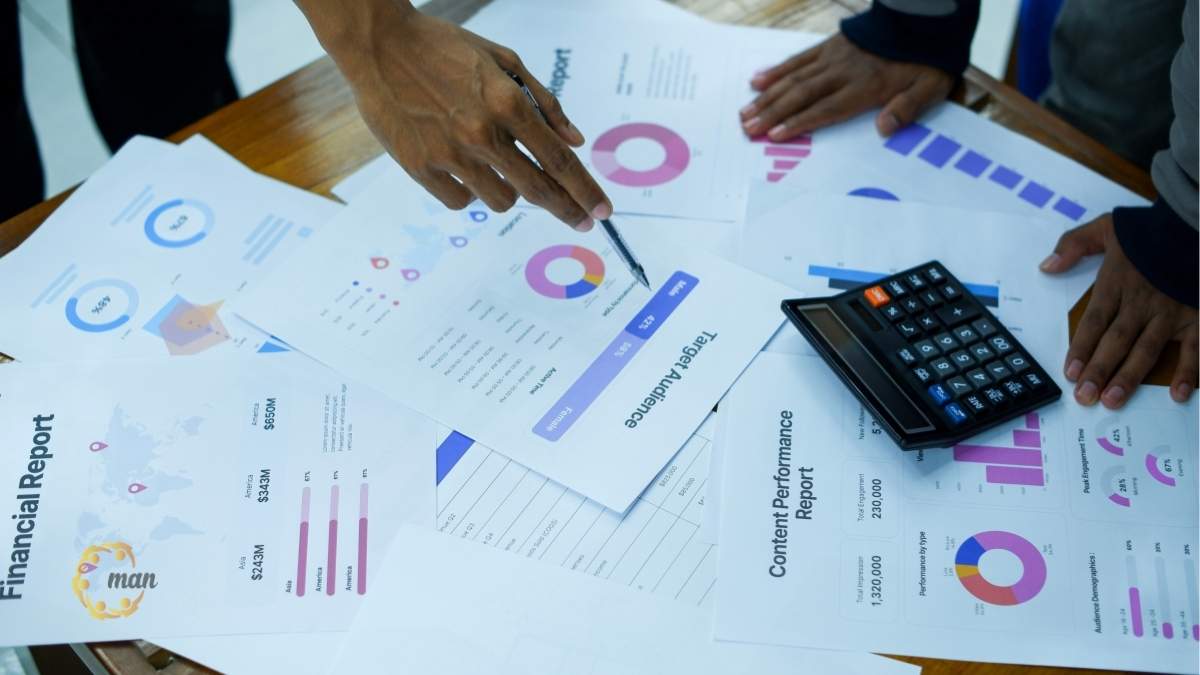
To a set financial reports To meet the standards of "honesty and fairness," the implementation process at professional units typically goes through five rigorous steps.
Step 1: Collect and verify the validity of original documents.
Before commencing financial reporting services, the service provider will review all input and output invoices. They will check elements such as tax identification numbers, addresses, product descriptions, and especially their validity according to Circular 78/2014/TT-BTC. This step helps eliminate the risk of "ghost invoices" or illegal documents.
Step 2: Classify and record economic transactions.
Each transaction is recorded in the corresponding accounts. For example, the allocation of prepaid expenses (Account 242) or depreciation of fixed assets (Account 214) needs to be calculated accurately to avoid distorting the profit picture. Mistakes in accounting entries can completely skew the entity's tax obligations.
Step 3: Reconcile accounts payable and conduct asset inventory.
Professional financial reporting services always require a reconciliation statement of accounts payable and receivable with customers and suppliers as of December 31st. This is the most important evidence to confirm the balances on the balance sheet. A physical inventory of assets helps ensure that the figures in the books accurately reflect the financial situation of the business.
Step 4: Prepare the trial balance and related reports.
After completing the revenue and expense closing entries and determining the business results, the accountant will prepare the Balance Sheet, Income Statement, and Cash Flow Statement. The figures at this stage need to be carefully reviewed for logic and consistency between the component reports.
Step 5: Finalize the explanatory notes to the financial statements.
The explanatory notes to financial statements are the detailed explanations of the figures. This is where the accounting policies applied and events occurring after the end of the fiscal year are explained, helping tax authorities understand the nature of the transactions. Clear explanatory notes help businesses score points for transparency in the eyes of investors.
Reference price list for financial statement preparation services.
Service fees typically depend on the size of revenue and the number of documents generated during the year. Below is a sample fee table for SMEs.
| Business size | Number of documents/month | Service Fee (VNĐ/Year) |
| Newly established businesses | < 10 documents | 2.000.000 – 3.500.000 |
| Small trading businesses | 10-30 documents | 5.000.000 – 8.000.000 |
| Manufacturing and construction businesses | 30-50 documents | 10.000.000 – 15.000.000 |
| Large enterprises/FDI capital | > 50 documents | Contact us for a separate quote. |
Note: The above fee includes the preparation of financial statements, corporate income tax returns, and personal income tax returns for employees.
See the detailed article here: Audit service price list
Common mistakes businesses need to be aware of.
During the process of providing financial reporting services, we have noticed that many businesses that prepare their own reports often make basic mistakes that have significant consequences.
Errors in inventory recording
Failure to calculate the cost of goods sold using the registered method (FIFO, Weighted Average) leads to discrepancies in the cost of goods sold. According to regulations, if a material error occurs, the enterprise is required to make retrospective adjustments in accordance with Accounting Standard No. 29. This error often results in an incorrect calculation of the entity's actual profit.
Confusion between deductible and non-deductible expenses.
Many accountants still include expenses without valid invoices or expenses for personal purposes as business expenses. A reputable financial reporting service will help business owners separate these items from the outset to avoid the risk of retroactive collection of corporate income tax and late payment penalties as stipulated by law.
The cash flow statement does not match.
This is a common technical error when the cash balance on the books is too large (negative balance) or bank deposits do not match the bank statements. This reduces the transparency of financial reports in the eyes of credit institutions. This directly affects the company's ability to borrow capital and its credit rating.
Benefits of outsourcing year-end financial reporting services.

Utilizing external resources provides business owners with a competitive advantage in terms of information and legal matters.
Consulted by a team of experienced experts.
When using financial reporting services, you're not just getting an accountant, but a team that includes auditors and tax consultants. They have a comprehensive view of risks and how to optimize tax compliance legally through a well-structured tax plan. This helps businesses stay proactive in the face of policy changes.
High legal responsibility
Financial reporting service contracts typically include a compensation clause in case of errors caused by the service provider. This provides complete peace of mind for the company's legal representative. The service provider will also represent the company in explaining the figures to tax authorities when necessary.
Providing timely data for management.
Instead of waiting until the end of the year, financial reporting services can provide reports quarterly or monthly. Based on these reports, business owners can adjust their business plans to suit their financial realities. Timely financial information is a crucial tool in making investment or expansion decisions.
Conclude
Financial reporting services serve as the "backbone" of every business's information management system. Investing appropriately in report quality not only ensures legal compliance but also builds trust with shareholders, partners, and financial institutions. In a digital age, transparency in financial data is a prerequisite for businesses to expand internationally.
However, to ensure that the accounting system truly operates effectively and to prevent internal fraud risks, businesses need a more objective perspective. MAN – Master Accountant Network proudly offers in-depth internal audit services, helping you review your entire operational process and financial controls. Financial statement audit This will serve as a second line of defense, helping to detect errors in financial reporting early, before tax authorities intervene. Contact MAN today for advice on a comprehensive financial standardization roadmap!
Other services
- Financial statement audit services
- Internal audit services
- Internal Control System Assessment Service
- Auditing services on request
- Professional tax audit services
- Construction auditing services
- Completed project settlement audit service
Service contact information at MAN – Master Accountant Network
- Address: No. 19A, Street 43, Tan Thuan Ward, Ho Chi Minh City
- Mobile/Zalo: 0903 963 163 – 0903 428 622
- Email: man@man.net.vn
Content production by: Mr. Le Hoang Tuyen – Founder & CEO MAN – Master Accountant Network, Vietnamese CPA Auditor with over 30 years of experience in Accounting, Auditing and Financial Consulting.
Frequently Asked Questions about Financial Reporting Services
What is the deadline for submitting annual financial reports?
According to current regulations, the deadline for submitting financial statements for private enterprises and partnerships is no later than 30 days from the end of the fiscal year; for other accounting entities, it is 90 days.
Do businesses that don't generate revenue still need to prepare financial statements?
Yes. Even if no revenue is generated, businesses are still required to provide financial reporting services to the tax authorities and statistical agencies as per regulations, except in cases of temporary business suspension for the entire calendar year.
Is it permissible to change accounting methods during the fiscal year?
No. According to the consistency principle of VAS, accounting methods must be applied consistently for at least one accounting year. If there are changes, the reasons and extent of the impact must be clearly explained in the following year's report.
Does the financial reporting service include tax explanations?
Most reputable companies include a clause to assist in explaining data when a tax audit or inspection is decided upon at the taxpayer's premises.