

Construction audit services are a comprehensive financial control solution chosen by investors and project management boards to verify the accuracy and legality of completed investment capital settlement reports. This is especially relevant in the context of increasingly stringent legal regulations. Decree 254/2025/ND-CP and Circular 91/2025/TT-BTCConducting an independent audit is not only a mandatory requirement for approving financial statements but also a shield protecting businesses from serious legal risks.
The process of settling public investment capital and large projects requires high accuracy in quantity surveying, application of norms, unit prices, and cost allocation. Without a consulting firm knowledgeable about the practicalities and tax risks in Vietnam, investors are likely to face delays in disbursement, rejected documents, or significant expense deductions during audits. Understanding these difficulties, MAN offers comprehensive consulting solutions, partnering with businesses to resolve issues, optimize documentation, and expedite the settlement process.
Summary of key focus areas for construction audit services.
- Define: Construction audit services involve independent inspection and evaluation conducted by professional auditing firms to verify the accuracy, reasonableness, and legality of final investment reports for completed projects.
- Purpose: Verify actual investment costs, prevent losses, eliminate improperly calculated expenses, and provide legally valid audit reports for approval of capital settlement by competent state authorities.
- Applicable subjects: Investors, project management boards, and contractors involved in projects using public investment capital, non-public state investment capital, or large-scale private projects require financial risk control.
- When should it be done? Immediately after the construction project or project component is completed, inspected, handed over, and put into use, and before submitting the capital settlement documents to the approving authority.
Why is it mandatory to use construction audit services after a project is completed?

When a construction project is completed, the transition from the construction phase to the operation phase requires the settlement of investment capital. This is a crucial legal step to legitimize all expenses incurred and record an increase in fixed assets for the enterprise or the state.
The mandatory legal basis for current projects.
According to Decree 254/2025/ND-CP on the management, payment, and settlement of public investment projects, large-scale projects in groups A, B, and C must undergo independent audits before being submitted to the competent authority for verification and approval of final accounts. For projects using state capital other than public investment, Circular 27/2025/TT-BTC also clearly stipulates the responsibility of the investor to hire independent auditors to review all construction costs.
The failure to implement audit Failing to meet the stipulated deadline not only slows down the capital settlement process but also exposes the investor to severe administrative penalties. As a result, capital is tied up, contractors are not paid in full, directly impacting the investor's reputation and the long-term cooperative relationship between the parties.
Financial risks and the possibility of expense disallowance.
In state inspection and auditing activities, construction projects consistently rank among the high-risk categories. Common errors include applying incorrect construction norms, duplicating quantities, using material unit prices that do not conform to the price announcements of the Joint Department of Finance and Construction, or discrepancies between completion documents and design drawings.
If you do not use the service basic construction audit Instead of proactively reviewing the situation early, these errors are only discovered when state inspection and auditing agencies intervene. At this point, the investor will have their expenses disallowed, meaning that payments made to contractors will not be accepted by the state as legitimate costs. The investor is forced to compensate out of their own pocket or reclaim money from subcontractors, a very difficult task in practice.
What are the latest legal regulations regarding auditing of basic construction projects?
The Vietnamese legal system regarding the management of construction investment costs is constantly being updated to minimize budget losses and improve capital efficiency. Investors need to thoroughly understand the following core documents to ensure their projects always comply with the law.
The current legal framework applicable to settlement procedures.
Currently, the process of settling investment capital for completed projects is governed by the latest legal regulations:
- Construction Law and related amendments and supplements.
- Government Decree 254/2025/ND-CP dated September 26, 2025, on the management, payment, and settlement of projects using public investment capital (replacing the old Decree 99/2021/ND-CP).
- Circular 91/2025/TT-BTC dated September 26, 2025, issued by the Ministry of Finance, provides guidance on the system of forms used in the final settlement of public investment capital for completed projects (from Form No. 01/QTDA to Form No. 12/QTDA).
- Circular 27/2025/TT-BTC dated May 22, 2025, issued by the Ministry of Finance, stipulates the final settlement of investment capital for completed projects using state capital other than public investment capital.
These documents place very high demands on the transparency of data and the accountability of both the investor and the supplier. construction auditing services.
Deadline for preparing and approving final accounts according to the new regulations.
To avoid the situation of projects being stalled for many years, Decree 254/2025/ND-CP stipulates in detail the maximum time limit for parties to complete their settlement obligations from the date of handover of the project for use.
| Project team | Deadline for the investor to prepare the final settlement documents. | Timeline for auditing and reviewing final accounts. | Maximum total time for approval |
| National key project, Group A project | Not more than 8 months | Not more than 4 months | 12 months |
| Group B Project | Not more than 6 months | Not more than 3 months | 9 months |
| Group C Project | Not more than 4 months | Not more than 2 months | 6 months |
The above data shows that the time pressure on project management teams is immense. Proactively contacting and utilizing construction audit services early on is the only solution to help investors meet the deadlines for submitting documents as required by law.
What are the steps involved in the process of providing construction audit services?

One audit process Standardization and professionalism are key factors determining the quality of independent audit reports. At reputable firms like MAN – Master Accountant Network, the basic construction audit service process strictly adheres to Vietnamese auditing standards and is divided into clearly defined stages.
Step 1: Prepare for the audit and gather initial information.
Immediately after signing audit service contract For basic construction, the audit team will conduct a field survey and collect all legal documents, technical documents, and financial and accounting records related to the project. The investor needs to cooperate in providing documents such as the investment policy, project approval decision, construction drawings, approved cost estimates, bidding documents, economic contracts, and acceptance minutes.
Step 2: Verify the legality of the construction investment.
Auditors will review compliance with state regulations on investment and construction procedures. This includes checking the authority to approve projects, compliance with bidding regulations, and the legality of economic contracts signed between the investor and consulting contractors, construction contractors, and equipment suppliers.
Step 3: Detailed audit of the final settlement value of the construction work.
This is the most time-consuming and error-prone part of a construction project. Inspection work includes:
- Compare the final settlement quantities with the as-built drawings, the minutes of acceptance of actual quantities, and the design documents.
- Verify whether the application of construction unit prices, material consumption norms, labor costs, and construction machinery costs is consistent with the contract agreement and state regulations at the time of construction.
- Compare the actual settlement value with the approved budget and the winning bid price to analyze and evaluate the reasons for cost increases or decreases.
Step 4: Audit the final settlement value of the equipment.
Auditors will compare the list, types, origins, technical specifications, and unit prices of the equipment actually installed at the construction site with the bidding documents, procurement contracts, and accompanying invoices. They will also verify the reasonableness of related costs such as transportation, storage, maintenance, and commissioning costs (loaded and unloaded).
Step 5: Audit the value of other expense settlements.
The extraneous costs include project management fees, supervision consulting fees, survey and design consulting fees, construction insurance fees, mine clearance fees, and land compensation and resettlement fees. The auditor will examine the legality and validity of the expenditure documents and recalculate the allocation of these costs to each specific project item.
Step 6: Compile data, draft, and issue the audit report.
After completing the detailed inspection, the audit team will summarize the findings, draft the final settlement report, and send it to the investor. Both parties will hold a meeting to discuss the discrepancies and agree on a solution for the unreasonable expenses. Once an agreement is reached, the audit firm will issue the official audit report to the investor for submission to the agency approving the final settlement.
What are the common risks of project owners encountering when dealing with payment issues?
With over 30 years of experience in auditing and tax consulting, experts at MAN – Master Accountant Network note that the majority of errors leading to expense disallowances during project completion often stem from the inexperience of project management and lax control over input documentation.
Errors in the calculation of construction quantities.
Many projects, during inspections, are found to have duplicated quantities. For example, the volume of concrete already includes the space occupied by reinforcement, but the contractor fails to subtract this during calculations, or the volume of earthwork is repeatedly calculated in overlapping sections. Independent auditors performing basic construction audits will use specialized software in combination with practical experience to detect these inconsistencies in the as-built drawings.
Risks related to the validity of invoices and documents, and tax risk management.
The construction sector in Vietnam is one of the most complex and risky sectors in terms of tax issues. It is very common for subcontractors to use invoices from businesses that have ceased operations, absconded from their business addresses, or to use illegal invoices to legitimize input material costs.
From MAN's perspective, if the investor does not have a strict mechanism to control the tax identification number and operational status of subcontractors right from the advance payment and payment for completed work, then when the capital is finalized, the tax authorities and the state audit agency will reject all these invoices. This leads to the investor being subject to retroactive collection of value-added tax, corporate income tax, and the exclusion of costs for the final settlement of the completed project.
Detailed price list for construction audit services at MAN.
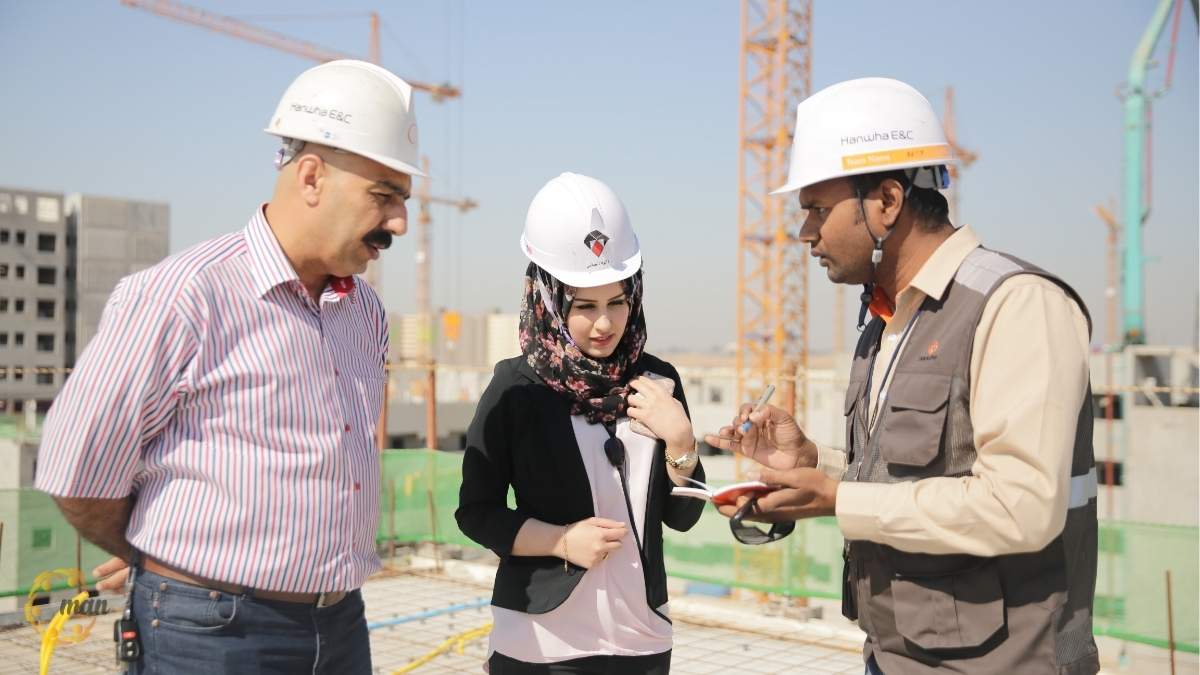
Spend Construction audit service fees MAN's fee structure is scientifically designed, based on the total investment scale of the project, the type of construction, and the complexity of the documentation. This fee framework adheres to market principles and regulations referenced from the Ministry of Finance to ensure transparency and optimize costs for investors.
Factors that directly affect service fees
Each construction project has its own unique characteristics. Therefore, the actual cost of basic construction audit services will be adjusted upwards or downwards based on specific criteria:
- Classification of construction projects: Civil and industrial construction projects typically have a higher density of equipment and more complex structures compared to transportation or purely infrastructure projects, requiring more time for detailed cost estimation.
- Number of tenders and contractors: The project has too many small, separate contracts and numerous affiliated subcontractors, resulting in a larger volume of legal documents and accounts payable that need to be reconciled.
- Status and quality of completion documents: If the handover documents are complete and well-organized, the audit time will be shortened and the fees will be maximally discounted. Conversely, projects lacking legal documents, with lost original certificates, or requiring assistance in reconstructing as-built drawings will incur additional costs.
- Special requirements for tax administration: Clients require in-depth checks regarding the invoicing risks of subcontractor systems or contractor tax obligations for machinery imported from overseas.
Table of fees for basic construction audit services by investment scale
Below is a reference fee schedule for basic construction audit services at MAN, broken down in detail according to the project's final settlement value (fees exclude value-added tax):
| Total project settlement value (VND) | Reference fee rate for Civil and Industrial Construction Projects (% based on value) | Reference fee rate for Transportation and Infrastructure Projects (% based on value) | Scope of work committed by MAN |
| Under 10 billion VND | 0.55% – 0.85% (Minimum 35 million VND) | 0.45% – 0.70% (Minimum 25 million VND) | Review all legal documents, break down the detailed quantities of completed work, compare other expense documents, and prepare and issue a legally compliant completed audit report. |
| From 10 billion to under 50 billion VND | 0.40% – 0.55% | 0.32% – 0.45% | Reviewing construction techniques, verifying the origin and specifications of equipment, assessing the validity of subcontractor invoicing systems, and assisting in reviewing related tax risks. |
| From 50 billion to under 100 billion VND | 0.28% – 0.40% | 0.22% – 0.32% | Comprehensive audit of all items, advice on optimizing tax risks related to cash flow, and support for business representatives in directly explaining data to the approving authority for 12 months. |
| From 100 billion to under 500 billion VND | 0.18% – 0.28% | 0.14% – 0.22% | Closely monitoring project sites, developing separate risk control procedures for each contract package, and providing consulting services on tax risk management and related-party transactions. |
| Over 500 billion VND | Agreement based on complexity | Agreement based on complexity | We design comprehensive audit solutions, assign senior auditors to accompany you throughout the construction and acceptance process, and guarantee absolute confidentiality of information. |
Additional charges and payment policies
- Field trip expenses: For projects located outside MAN's representative office areas (Ho Chi Minh City, Binh Duong, Dong Nai, Long An), the travel and accommodation costs for the audit team at the construction site will be specifically agreed upon by both parties in the service contract (it may be a lump sum or paid based on actual expenses incurred).
- Flexible advance payment policy: Typically, construction audit service contracts at MAN are divided into three payment installments: Installment 1: an advance payment of 30% to 40% immediately after signing the contract and handing over the initial documents; Installment 2: a further payment of 40% after completion of the on-site audit and submission of the draft report; Installment 3: the remaining 20% to 30% after the issuance of the official audit report.
Project audit solutions from MAN – Master Accountant Network
MAN – Master Accountant Network is a network of reputable accounting, auditing, and tax consulting professionals in Vietnam. We provide solutions. auditing services Comprehensive basic construction helps investors resolve all obstacles, expedite the approval process for final accounts, and optimize legitimate project costs.
The outstanding strengths of the MAN brand.
- Our team of experts has over 30 years of experience: MAN possesses a team of auditors and construction valuation engineers with extensive practical experience, having directly participated in auditing the final accounts of hundreds of public investment projects, FDI projects, and large-scale industrial construction projects in Vietnam.
- Deep understanding of the practical aspects of tax risk management: What sets MAN apart is its ability to seamlessly combine basic construction auditing techniques with tax risk management consulting. We not only review construction volumes but also proactively identify and warn of risks related to invoices, payment documents, foreign contractor tax obligations, and complex related-party transactions.
- A clear commitment to legal responsibility: MAN is committed to supporting investors throughout the process of explaining financial data to state inspection and auditing agencies and investment capital settlement approval agencies.
MAN's service area
MAN provides construction audit services nationwide. We have representative offices and teams of experts stationed in prime locations such as District 1, District 7 (Ho Chi Minh City), Binh Duong, Dong Nai, Long An provinces, and key economic zones in the North to provide the fastest possible support to our clients.
Case Study: Success from MAN's Capital Construction Audit Services
To help you better understand the practical value we deliver, here is a summary of a real-life case that MAN successfully handled for a partner.
Client's project context
Last year, MAN provided capital construction audit services for an FDI factory project in Binh Duong with a total investment of over 120 billion VND. The project has undergone trial operation, but the final settlement documents have been stalled for nearly 9 months. The reason is that the investor and the main contractor have not yet agreed on the additional work outside the contract. At the same time, the company is also facing significant difficulties regarding contractor tax on imported equipment.
Solutions and results achieved by the MAN expert team.
Upon taking over the project, MAN's team of experts, with over 30 years of experience, quickly implemented the following solutions:
- Review and standardize documents: After conducting a thorough survey and comparison of all as-built drawings of the main factory building with the actual quantities, MAN discovered that the contractor had duplicated the calculation of reinforcement steel and excavation work worth nearly 1.8 billion VND.
- Managing contractor tax risks: MAN's team of experts, with their in-depth knowledge of tax risk management practices, directly reviewed the terms of the imported equipment procurement contract (CIF delivery terms combined with domestic installation and commissioning services). We advised the investor to adjust the method of declaring and paying contractor tax to comply with current regulations, avoiding the risk of penalties for late payment and tax arrears exceeding VND 1.2 billion from the tax authorities.
- Supporting successful negotiations: MAN acts as an independent intermediary, organizing tripartite meetings between the Investor – Main Contractor – Auditor to clearly explain discrepancies based on clear technical specifications.
As a result, the audit report issued by MAN was unanimously agreed upon by all parties, who signed a final acceptance document confirming the settlement of outstanding debts. The settlement documents were then successfully approved by the regulatory authority within just 3 months, allowing the investor to release the blocked capital flow and confidently focus on production and business operations.
Conclude
Construction auditing services are a key solution that helps investors and project management teams ensure the legality and accuracy of investment costs, while minimizing the time required for approving final project accounts. Proactively collaborating with a professional auditor is crucial. auditing unit Establishing a reputable independent entity early on not only prevents the risk of expense disallowance but also helps businesses standardize all legal and financial records in accordance with the latest legal regulations.
If your business has a construction project nearing completion and you're looking for a secure and transparent settlement solution, choose MAN's construction audit services. With a team of experts boasting over 30 years of practical experience and a thorough understanding of Vietnam's tax laws, MAN proudly stands as your trusted partner in protecting your investment value and optimizing your business's financial performance. Contact MAN today for detailed consultation!
Service contact information at MAN – Master Accountant Network
- Address: No. 19A, Street 43, Tan Thuan Ward, Ho Chi Minh City
- Mobile/Zalo: 0903 963 163 – 0903 428 622
- Email: man@man.net.vn
Content production by: Mr. Le Hoang Tuyen – Founder & CEO MAN – Master Accountant Network, Vietnamese CPA Auditor with over 30 years of experience in Accounting, Auditing and Financial Consulting.
Frequently Asked Questions about Construction Audit Services
What is the deadline for submitting the final project settlement report according to Decree 254/2025/ND-CP?
According to Article 47 of Decree 254/2025/ND-CP, the deadline for preparing the final investment capital settlement report for completed projects, calculated from the date of signing the handover minutes for putting the project into use, is: no more than 8 months for nationally important and Group A projects; no more than 6 months for Group B projects; and no more than 4 months for Group C projects.
How are the costs of hiring a construction audit service calculated?
Audit service fees are typically determined as a percentage of the project's final settlement value, following general guidelines from the Ministry of Finance, or are negotiated directly between the investor and the auditing firm based on the complexity, number of items, and scale of the investment project.
When is it mandatory for a construction project to hire an independent construction audit service?
All projects using public investment capital and large-scale projects using non-public investment state capital are required to undergo independent audits before submitting final settlement documents to the competent authority for approval. For private projects, auditing is voluntary but extremely necessary to control financial risks and ensure transparent asset transfer.
What is the difference between a construction audit and an annual financial statement audit?
Annual financial statement audits focus on assessing the accuracy and fairness of all financial indicators, revenues, and expenses of a business during a fiscal year. Meanwhile, construction audits delve into verifying the legality of investment costs for a specific project from commencement to completion, examining in detail construction norms, completed work volumes, and material unit prices for each specific contract package.
What documents does a business need to prepare for a final audit?
The investor needs to prepare complete legal documents for the project (investment decision, design approval, cost estimate, bidding documents, etc.), technical documents (construction drawings, as-built drawings, minutes of acceptance of work volume, minutes of acceptance for commissioning), and financial documents (economic contracts, invoices, accounting books tracking the capital and investment costs of the project).